ดีบัก jobs ด้วย NEAT
เวอร์ชันของ Package
โค้ดในหน้านี้พัฒนาโดยใช้ requirements ต่อไปนี้ แนะนำให้ใช้เวอร์ชันเหล่านี้หรือใหม่กว่า
qiskit[all]~=2.5.2
qiskit-ibm-runtime~=0.47.0
qiskit-aer~=0.17
คุณสามารถใช้คลาส Neat เพื่อวิเคราะห์ผลกระทบของ noise ต่อ Estimator workload สำหรับการตรวจสอบ syntax ให้ใช้ Local testing mode
การใช้งานคลาส Neat
ก่อนส่ง workload ที่ใช้ทรัพยากรมากไปรันบนฮาร์ดแวร์ คุณสามารถใช้ IBM Quantum Compute NEAT (Noisy Estimator Analyzer Tool) class เพื่อตรวจสอบว่า Estimator workload ของคุณตั้งค่าถูกต้อง มีแนวโน้มคืนผลลัพธ์ที่แม่นยำ ใช้ options ที่เหมาะสมที่สุดสำหรับปัญหาที่กำหนด และอื่น ๆ
Neat แปลง Circuit อินพุตให้เป็น Clifford เพื่อการจำลองที่มีประสิทธิภาพ ในขณะที่ยังคงโครงสร้างและความลึกของ Circuit ไว้ Clifford Circuit มีระดับ noise ใกล้เคียงกันและเป็นตัวแทนที่ดีสำหรับศึกษา Circuit ต้นฉบับที่สนใจ
ก่อนอื่น นำเข้า package ที่เกี่ยวข้องและ ยืนยันตัวตนกับ IBM Quantum Compute Service
เตรียม environment
# Added by doQumentation — required packages for this notebook
!pip install -q numpy qiskit qiskit-aer qiskit-ibm-runtime
import numpy as np
import random

from qiskit.circuit import QuantumCircuit
from qiskit.transpiler import generate_preset_pass_manager
from qiskit.quantum_info import SparsePauliOp

from qiskit_ibm_runtime import QiskitRuntimeService, EstimatorV2 as Estimator
from qiskit_ibm_runtime.debug_tools import Neat

from qiskit_aer.noise import NoiseModel, depolarizing_error
# Choose the least busy backend
service = QiskitRuntimeService()
backend = service.least_busy(operational=True, simulator=False)

# Generate a preset pass manager
# This will be used to convert the abstract circuit to an equivalent
# Instruction Set Architecture (ISA) circuit.

pm = generate_preset_pass_manager(backend=backend, optimization_level=0)

# Set the random seed
random.seed(10)
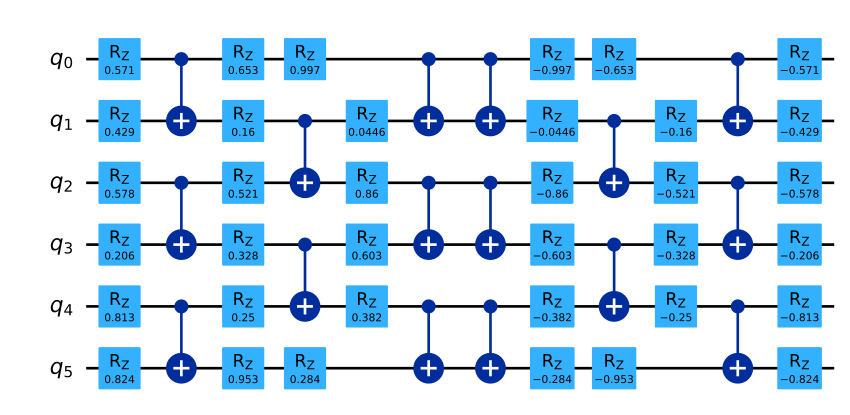
สร้าง Circuit เป้าหมาย
พิจารณา Circuit หก Qubit ที่มีคุณสมบัติดังต่อไปนี้:
-
สลับระหว่างการหมุน
RZแบบสุ่มและชั้นของ GateCNOT -
มีโครงสร้างแบบ mirror คือ ใช้ unitary
Uตามด้วย inverse ของมัน
def generate_circuit(n_qubits, n_layers):
    r"""
    A function to generate a pseudo-random a circuit with ``n_qubits`` qubits
    and ``2*n_layers`` entangling layers of the type used in this notebook.
    """
    # An array of random angles
    angles = [
        [random.random() for q in range(n_qubits)] for s in range(n_layers)
    ]

    qc = QuantumCircuit(n_qubits)
    qubits = list(range(n_qubits))

    # do random circuit
    for layer in range(n_layers):
        # rotations
        for q_idx, qubit in enumerate(qubits):
            qc.rz(angles[layer][q_idx], qubit)

        # cx gates
        control_qubits = (
            qubits[::2] if layer % 2 == 0 else qubits[1 : n_qubits - 1 : 2]
        )
        for qubit in control_qubits:
            qc.cx(qubit, qubit + 1)

    # undo random circuit
    for layer in range(n_layers)[::-1]:
        # cx gates
        control_qubits = (
            qubits[::2] if layer % 2 == 0 else qubits[1 : n_qubits - 1 : 2]
        )
        for qubit in control_qubits:
            qc.cx(qubit, qubit + 1)

        # rotations
        for q_idx, qubit in enumerate(qubits):
            qc.rz(-angles[layer][q_idx], qubit)

    return qc

# Generate a random circuit
qc = generate_circuit(6, 3)
# Convert the abstract circuit to an equivalent ISA circuit.
isa_qc = pm.run(qc)

qc.draw("mpl", idle_wires=0)
เลือก operator Z แบบ single-Pauli เป็น observable และใช้เพื่อสร้าง primitive unified blocs (PUBs)
# Initialize the observables
obs = ["ZIIIII", "IZIIII", "IIZIII", "IIIZII", "IIIIZI", "IIIIIZ"]
print(f"Observables: {obs}")

# Map the observables to the backend's layout
isa_obs = [SparsePauliOp(o).apply_layout(isa_qc.layout) for o in obs]

# Initialize the PUBs, which consist of six-qubit circuits
# with `n_layers` 1, ..., 6
all_n_layers = [1, 2, 3, 4, 5, 6]

pubs = [(pm.run(generate_circuit(6, n)), isa_obs) for n in all_n_layers]
Observables: ['ZIIIII', 'IZIIII', 'IIZIII', 'IIIZII', 'IIIIZI', 'IIIIIZ']
แปลง Circuit เป็น Clifford
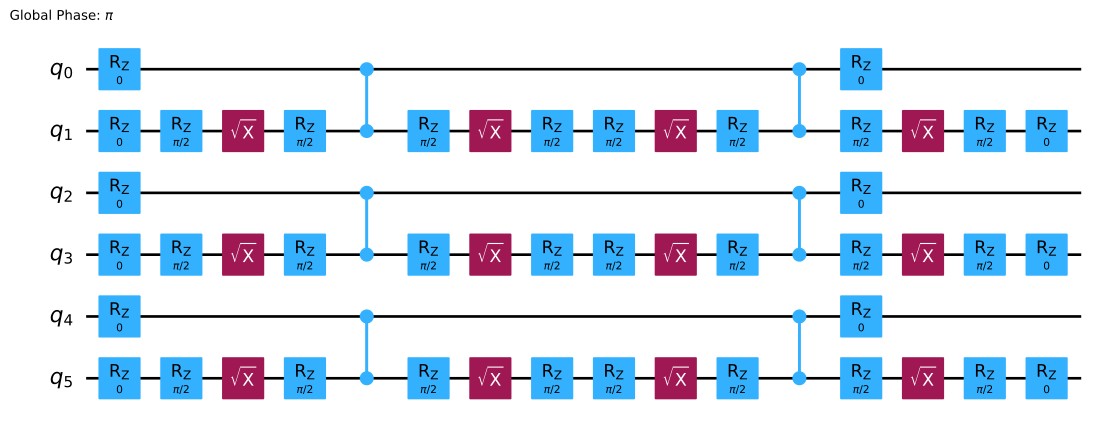
PUB Circuit ที่กำหนดไว้ก่อนหน้าไม่ใช่ Clifford ซึ่งทำให้ยากต่อการจำลองแบบ classical อย่างไรก็ตาม คุณสามารถใช้เมธอด to_clifford ของ Neat เพื่อแมปไปยัง Clifford Circuit สำหรับการจำลองที่มีประสิทธิภาพมากขึ้น เมธอด to_clifford เป็น wrapper ของ Transpiler pass ConvertISAToClifford ซึ่งสามารถใช้งานแยกต่างหากได้เช่นกัน โดยเฉพาะอย่างยิ่ง มันแทนที่ Gate single-Qubit ที่ไม่ใช่ Clifford ใน Circuit ต้นฉบับด้วย Gate single-Qubit แบบ Clifford แต่ไม่เปลี่ยนแปลง Gate สอง Qubit จำนวน Qubit หรือความลึกของ Circuit
ดูข้อมูลเพิ่มเติมเกี่ยวกับการจำลอง Clifford Circuit ได้ที่ Efficient simulation of stabilizer circuits with Qiskit Aer primitives
ก่อนอื่น สร้าง Neat
# You could specify a custom `NoiseModel` here. If `None`, `Neat`
# pulls the noise model from the given backend
noise_model = None

# Initialize `Neat`
analyzer = Neat(backend, noise_model)
ต่อไป แปลง PUBs ให้เป็น Clifford
clifford_pubs = analyzer.to_clifford(pubs)

clifford_pubs[0].circuit.draw("mpl", idle_wires=0)
Application 1: วิเคราะห์ผลกระทบของ noise ต่อ output ของ Circuit
ตัวอย่างนี้แสดงวิธีใช้ Neat เพื่อศึกษาผลกระทบของ noise model ต่างๆ ต่อ PUBs ตามความลึกของ Circuit โดยรันการจำลองในสภาวะทั้ง ideal (ideal_sim) และ noisy (noisy_sim) ซึ่งมีประโยชน์ในการตั้งความคาดหวังเกี่ยวกับคุณภาพของผลลัพธ์จากการทดลองก่อนรัน job บน QPU ดูข้อมูลเพิ่มเติมเกี่ยวกับ noise model ได้ที่ Exact and noisy simulation with Qiskit Aer primitives
ผลลัพธ์จากการจำลองรองรับการดำเนินการทางคณิตศาสตร์ จึงสามารถนำมาเปรียบเทียบกัน (หรือกับผลลัพธ์จากการทดลอง) เพื่อคำนวณค่าวัดประสิทธิภาพได้
QPU สามารถได้รับผลกระทบจาก noise หลายประเภท noise model ของ Qiskit Aer ที่ใช้ที่นี่จำลองเพียงบางส่วนเท่านั้น จึงมีแนวโน้มรุนแรงน้อยกว่า noise บน QPU จริง
ดูรายละเอียดว่า error ใดบ้างที่รวมอยู่เมื่อสร้าง noise model จาก QPU ได้ที่ API reference ของ Aer NoiseModel
เริ่มต้นด้วยการรันการจำลองแบบ classical ทั้ง ideal และ noisy
# Perform a noiseless simulation
ideal_results = analyzer.ideal_sim(clifford_pubs)
print(f"Ideal results:\n {ideal_results}\n")

# Perform a noisy simulation with the backend's noise model
noisy_results = analyzer.noisy_sim(clifford_pubs)
print(f"Noisy results:\n {noisy_results}\n")
Ideal results:
 NeatResult([NeatPubResult(vals=array([1., 1., 1., 1., 1., 1.])), NeatPubResult(vals=array([1., 1., 1., 1., 1., 1.])), NeatPubResult(vals=array([1., 1., 1., 1., 1., 1.])), NeatPubResult(vals=array([1., 1., 1., 1., 1., 1.])), NeatPubResult(vals=array([1., 1., 1., 1., 1., 1.])), NeatPubResult(vals=array([1., 1., 1., 1., 1., 1.]))])
Noisy results:
 NeatResult([NeatPubResult(vals=array([0.99609375, 0.99414062, 0.98632812, 0.9921875 , 0.97460938,
       0.97851562])), NeatPubResult(vals=array([0.984375  , 0.98828125, 0.98046875, 0.98632812, 0.96679688,
       0.98828125])), NeatPubResult(vals=array([0.9609375 , 0.9765625 , 0.953125  , 0.95898438, 0.95703125,
       0.96679688])), NeatPubResult(vals=array([0.96875   , 0.97070312, 0.93164062, 0.94335938, 0.93164062,
       0.97460938])), NeatPubResult(vals=array([0.9140625 , 0.9296875 , 0.91796875, 0.92382812, 0.90429688,
       0.91992188])), NeatPubResult(vals=array([0.89648438, 0.9140625 , 0.921875  , 0.94921875, 0.92773438,
       0.95117188]))])
ต่อไป นำการดำเนินการทางคณิตศาสตร์มาใช้เพื่อคำนวณผลต่างสัมบูรณ์ ส่วนที่เหลือของคู่มือนี้ใช้ผลต่างสัมบูรณ์เป็นค่าวัดประสิทธิภาพสำหรับเปรียบเทียบผลลัพธ์ ideal กับผลลัพธ์ noisy หรือผลจากการทดลอง แต่สามารถกำหนดค่าวัดประสิทธิภาพในลักษณะเดียวกันนี้ได้เช่นกัน
ผลต่างสัมบูรณ์แสดงให้เห็นว่าผลกระทบของ noise เพิ่มขึ้นตามขนาดของ Circuit
# Figure of merit: Absolute difference
def rdiff(res1, res2):
    r"""The absolute difference between `res1` and res2`.

    --> The closer to `0`, the better.
    """
    d = abs(res1 - res2)
    return np.round(d.vals * 100, 2)

for idx, (ideal_res, noisy_res) in enumerate(
    zip(ideal_results, noisy_results)
):
    vals = rdiff(ideal_res, noisy_res)

    # Print the mean absolute difference for the observables
    mean_vals = np.round(np.mean(vals), 2)
    print(
        f"Mean absolute difference between ideal and noisy results "
        f"for circuits with {all_n_layers[idx]} layers:\n  {mean_vals}%\n"
    )
Mean absolute difference between ideal and noisy results for circuits with 1 layers:
  1.3%

Mean absolute difference between ideal and noisy results for circuits with 2 layers:
  1.76%

Mean absolute difference between ideal and noisy results for circuits with 3 layers:
  3.78%

Mean absolute difference between ideal and noisy results for circuits with 4 layers:
  4.66%

Mean absolute difference between ideal and noisy results for circuits with 5 layers:
  8.17%

Mean absolute difference between ideal and noisy results for circuits with 6 layers:
  7.32%
คุณสามารถปฏิบัติตามแนวทางคร่าวๆ และแบบง่ายต่อไปนี้เพื่อปรับปรุง Circuit ประเภทนี้:
-
ถ้าผลต่างสัมบูรณ์เฉลี่ยมากกว่า 90% การลด error มักจะไม่ช่วยได้
-
ถ้าผลต่างสัมบูรณ์เฉลี่ยน้อยกว่า 90% Probabilistic Error Amplification (PEA) มักจะสามารถปรับปรุงผลลัพธ์ได้
-
ถ้าผลต่างสัมบูรณ์เฉลี่ยน้อยกว่า 80% ZNE with gate folding ก็มักจะสามารถปรับปรุงผลลัพธ์ได้เช่นกัน
เนื่องจากผลต่างสัมบูรณ์ทั้งหมดข้างต้นน้อยกว่า 90% การใช้ PEA กับ Circuit ต้นฉบับจึงน่าจะช่วยปรับปรุงคุณภาพของผลลัพธ์ได้ คุณสามารถกำหนด noise model ต่างๆ ในตัววิเคราะห์ได้ ตัวอย่างต่อไปนี้ทำการทดสอบเดียวกันแต่เพิ่ม noise model แบบกำหนดเอง
# Set up a noise model with strength 0.02 on every two-qubit gate
noise_model = NoiseModel()
for qubits in backend.coupling_map:
    noise_model.add_quantum_error(
        depolarizing_error(0.02, 2), ["ecr", "cx", "cz"], qubits
    )

# Update the analyzer's noise model
analyzer.noise_model = noise_model

# Perform a noiseless simulation
ideal_results = analyzer.ideal_sim(clifford_pubs)

# Perform a noisy simulation with the backend's noise model
noisy_results = analyzer.noisy_sim(clifford_pubs)

# Compare the results
for idx, (ideal_res, noisy_res) in enumerate(
    zip(ideal_results, noisy_results)
):
    values = rdiff(ideal_res, noisy_res)

    # Print the mean absolute difference for the observables
    mean_values = np.round(np.mean(values), 2)
    print(
        f"Mean absolute difference between ideal and noisy results "
        f"for circuits with {all_n_layers[idx]} layers:\n  {mean_values}%\n"
    )
Mean absolute difference between ideal and noisy results for circuits with 1 layers:
  4.16%

Mean absolute difference between ideal and noisy results for circuits with 2 layers:
  8.92%

Mean absolute difference between ideal and noisy results for circuits with 3 layers:
  12.86%

Mean absolute difference between ideal and noisy results for circuits with 4 layers:
  17.45%

Mean absolute difference between ideal and noisy results for circuits with 5 layers:
  25.82%

Mean absolute difference between ideal and noisy results for circuits with 6 layers:
  27.96%
ดังที่แสดงให้เห็น เมื่อกำหนด noise model คุณสามารถพยายามวัดปริมาณผลกระทบของ noise ต่อ PUBs ที่สนใจ (ในเวอร์ชัน Cliffordized) ก่อนรันบน QPU
Application 2: เปรียบเทียบกลยุทธ์ต่างๆ
ตัวอย่างนี้ใช้ Neat เพื่อช่วยระบุ options ที่ดีที่สุดสำหรับ PUBs ของคุณ ลองพิจารณาการรันปัญหา estimation ด้วย PEA ซึ่งไม่สามารถจำลองด้วย qiskit_aer ได้ คุณสามารถใช้ Neat เพื่อช่วยกำหนดว่า noise amplification factors ใดจะทำงานได้ดีที่สุด แล้วนำ factors เหล่านั้นไปใช้เมื่อรันการทดลองจริงบน QPU
# Generate a circuit with six qubits and six layers
isa_qc = pm.run(generate_circuit(6, 3))

# Use the same observables as previously
pubs = [(isa_qc, isa_obs)]
clifford_pubs = analyzer.to_clifford(pubs)
noise_factors = [
    [1, 1.1],
    [1, 1.1, 1.2],
    [1, 1.5, 2],
    [1, 1.5, 2, 2.5, 3],
    [1, 4],
]
# Run the PUBs on a QPU
estimator = Estimator(backend)
estimator.options.default_shots = 100000
estimator.options.twirling.enable_gates = True
estimator.options.twirling.enable_measure = True
estimator.options.twirling.shots_per_randomization = 100
estimator.options.resilience.measure_mitigation = True
estimator.options.resilience.zne_mitigation = True
estimator.options.resilience.zne.amplifier = "pea"

jobs = []
for factors in noise_factors:
    estimator.options.resilience.zne.noise_factors = factors
    jobs.append(estimator.run(clifford_pubs))

results = [job.result() for job in jobs]
# Perform a noiseless simulation
ideal_results = analyzer.ideal_sim(clifford_pubs)
# Look at the mean absolute difference to quickly determine
# the best choice for your options
for factors, res in zip(noise_factors, results):
    d = rdiff(ideal_results[0], res[0])
    print(
        f"Mean absolute difference for factors "
        f"{factors}:\n  {np.round(np.mean(d), 2)}%\n"
    )
Mean absolute difference for factors [1, 1.1]:
  10.9%

Mean absolute difference for factors [1, 1.1, 1.2]:
  4.64%

Mean absolute difference for factors [1, 1.5, 2]:
  4.33%

Mean absolute difference for factors [1, 1.5, 2, 2.5, 3]:
  5.66%

Mean absolute difference for factors [1, 4]:
  4.53%
ผลลัพธ์ที่มีความแตกต่างน้อยที่สุดจะบอกว่าควรเลือก options ใด
ขั้นตอนถัดไป
- อ่านภาพรวมของ Qiskit debugging tools
- เรียนรู้เกี่ยวกับ การจำลองแบบ Exact และ noisy ด้วย Qiskit Aer primitives
- เรียนรู้เกี่ยวกับ IBM Quantum Compute options ที่มีให้ใช้งาน
- เรียนรู้เกี่ยวกับ เทคนิค Error mitigation และ suppression
- ดูหัวข้อ Transpile with pass managers
- เรียนรู้ วิธี transpile circuits ในฐานะส่วนหนึ่งของ Qiskit patterns workflow
- ดู เอกสาร API สำหรับ Debugging tools