เขียน transpiler pass ของตัวเอง
เวอร์ชันแพ็กเกจ
โค้ดในหน้านี้พัฒนาโดยใช้ข้อกำหนดต่อไปนี้ เราแนะนำให้ใช้เวอร์ชันเหล่านี้หรือใหม่กว่า
qiskit[all]~=2.5.2
Qiskit SDK ให้คุณสร้าง transpilation pass แบบกำหนดเองและรันใน object PassManager หรือเพิ่มเข้าไปใน StagedPassManager ในที่นี้เราจะสาธิตวิธีการเขียน transpiler pass โดยเน้นที่การสร้าง pass ที่ทำ Pauli twirling บน noisy quantum gate ใน quantum circuit ตัวอย่างนี้ใช้ DAG ซึ่งเป็น object ที่ถูกจัดการโดย pass ประเภท TransformationPass
# Added by doQumentation — required packages for this notebook
!pip install -q numpy qiskit
พื้นฐาน: การแทนค่าแบบ DAG
ก่อนสร้าง pass ควรทำความเข้าใจวิธีที่ Qiskit แทนวงจรควอนตัมภายในเสียก่อน ซึ่งก็คือ directed acyclic graph (DAG) (ดู tutorial นี้ สำหรับภาพรวม) เพื่อทำตามขั้นตอนเหล่านี้ ให้ติดตั้งไลบรารี graphviz สำหรับฟังก์ชันการวาดกราฟ DAG
ใน Qiskit ในขั้นตอนของการแปลง (transpilation) วงจรจะถูกแสดงโดยใช้ DAG โดยทั่วไป DAG ประกอบด้วย vertices (หรือเรียกว่า "nodes") และ edges ที่มีทิศทางซึ่งเชื่อมต่อคู่ของ vertices ในทิศทางใดทิศทางหนึ่ง การแสดงผลนี้ถูกเก็บโดยใช้อ็อบเจ็กต์ qiskit.dagcircuit.DAGCircuit ซึ่งประกอบด้วยอ็อบเจ็กต์ DagNode แต่ละตัว ข้อดีของการแสดงผลนี้เมื่อเทียบกับรายการเกตแบบล้วน (นั่นคือ netlist) ก็คือการไหลของข้อมูลระหว่างการดำเนินการนั้นชัดเจน ทำให้ง่ายต่อการตัดสินใจในการแปลงรูปแบบ
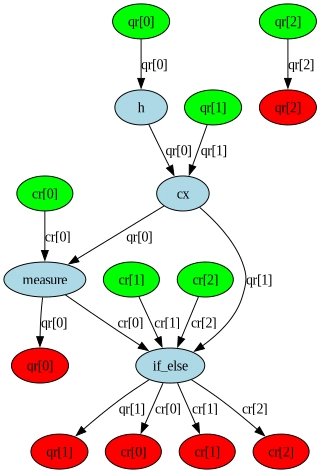
ตัวอย่างนี้แสดง DAG โดยการสร้าง Circuit ง่าย ๆ ที่เตรียม Bell state และใช้การหมุน ขึ้นอยู่กับผลลัพธ์การวัด
from qiskit import QuantumRegister, ClassicalRegister, QuantumCircuit
import numpy as np

qr = QuantumRegister(3, 'qr')
cr = ClassicalRegister(3, 'cr')
qc = QuantumCircuit(qr, cr)

qc.h(qr[0])
qc.cx(qr[0], qr[1])
qc.measure(qr[0], cr[0])
with qc.if_test((cr, 2)):
    qc.rz(np.pi/2, qr[1])
qc.draw(output='mpl')

ใช้ฟังก์ชัน qiskit.tools.visualization.dag_drawer() เพื่อดู DAG ของวงจรนี้ มี node กราฟสามประเภท ได้แก่ node ของ qubit/clbit (สีเขียว), node ของการดำเนินการ (สีน้ำเงิน) และ node ของเอาต์พุต (สีแดง) แต่ละ edge บ่งบอกถึงการไหลของข้อมูล (หรือความสัมพันธ์การพึ่งพา) ระหว่างสอง node
from qiskit.converters import circuit_to_dag
from qiskit.visualization import dag_drawer

dag = circuit_to_dag(qc)
dag_drawer(dag)
Transpiler pass
Transpiler pass จัดประเภทเป็น AnalysisPass หรือ TransformationPass Pass โดยทั่วไปทำงานกับ DAG และ property_set ซึ่งเป็นออบเจกต์คล้าย dictionary สำหรับจัดเก็บคุณสมบัติที่กำหนดโดย analysis pass Analysis pass ทำงานกับทั้ง DAG และ property_set ของมัน ไม่สามารถแก้ไข DAG ได้ แต่สามารถแก้ไข property_set ได้ ซึ่งต่างจาก transformation pass ที่แก้ไข DAG ได้ และอ่าน (แต่เขียนไม่ได้) property_set ตัวอย่างเช่น transformation pass แปล Circuit เป็น ISA หรือดำเนินการ routing pass เพื่อแทรก SWAP Gate ตามความจำเป็น
สร้าง PauliTwirl transpiler pass
ตัวอย่างต่อไปนี้สร้าง transpiler pass ที่เพิ่ม Pauli twirl Pauli twirling เป็นกลยุทธ์การระงับข้อผิดพลาดที่ทำให้การที่ qubit สัมผัสกับ channel ที่มีสัญญาณรบกวนเป็นแบบสุ่ม ซึ่งในตัวอย่างนี้สันนิษฐานว่าเป็น Gate สองคิวบิต (เพราะมีโอกาสเกิดข้อผิดพลาดสูงกว่า Gate คิวบิตเดี่ยวมาก) Pauli twirl ไม่ส่งผลต่อการทำงานของ Gate สองคิวบิต โดยถูกเลือกให้ Pauli ที่ใช้ ก่อน Gate สองคิวบิต (ทางซ้าย) ถูกยกเลิกโดย Pauli ที่ใช้ หลัง Gate สองคิวบิต (ทางขวา) ในแง่นี้ operation สองคิวบิตเหมือนกัน แต่วิธีดำเนินการต่างกัน ประโยชน์อย่างหนึ่งของ Pauli twirling คือเปลี่ยน coherent error เป็น stochastic error ซึ่งสามารถปรับปรุงได้โดยการเฉลี่ยมากขึ้น
Transpiler pass ทำงานบน DAG ดังนั้นเมธอดสำคัญที่ต้อง override คือ .run() ซึ่งรับ DAG เป็น input การ initialize คู่ของ Pauli ตามที่แสดงจะรักษาการทำงานของ Gate สองคิวบิตแต่ละตัว ทำได้ด้วย helper method build_twirl_set ที่วนผ่าน Pauli สองคิวบิตแต่ละตัว (ที่ได้จาก pauli_basis(2)) และหา Pauli อื่นที่รักษาการทำงาน
จาก DAG ใช้เมธอด op_nodes() เพื่อส่งคืน node ทั้งหมด DAG ยังใช้รวบรวม run ได้ ซึ่งเป็นลำดับของ node ที่รันต่อเนื่องบน qubit รวบรวมเป็น single-qubit run ด้วย collect_1q_runs, two-qubit run ด้วย collect_2q_runs และ run ของ node ที่ชื่อ instruction อยู่ใน namelist ด้วย collect_runs DAGCircuit มีเมธอดมากมายสำหรับค้นหาและ traverse graph เมธอดที่ใช้บ่อยคือ topological_op_nodes ที่ให้ node ตามลำดับ dependency เมธอดอื่น เช่น bfs_successors ใช้เป็นหลักเพื่อตรวจสอบว่า node โต้ตอบกับ operation ที่ตามมาบน DAG อย่างไร
ในตัวอย่าง ต้องการแทนที่ node แต่ละตัวที่แสดง instruction ด้วย subcircuit ที่สร้างเป็น mini DAG mini DAG มี quantum register สองคิวบิตที่เพิ่มเข้าไป เพิ่ม operation ไปยัง mini DAG โดยใช้ apply_operation_back ซึ่งวาง Instruction บน output ของ mini DAG (ส่วน apply_operation_front จะวางบน input ของ mini DAG) จากนั้นแทนที่ node ด้วย mini DAG โดยใช้ substitute_node_with_dag และกระบวนการดำเนินต่อสำหรับแต่ละ instance ของ CXGate และ ECRGate ใน DAG (ซึ่งสอดคล้องกับ basis Gate สองคิวบิตบน IBM® Backend)
from qiskit.dagcircuit import DAGCircuit
from qiskit.circuit import QuantumCircuit, QuantumRegister, Gate
from qiskit.circuit.library import CXGate, ECRGate
from qiskit.transpiler import PassManager
from qiskit.transpiler.basepasses import TransformationPass
from qiskit.quantum_info import Operator, pauli_basis

import numpy as np

from typing import Iterable, Optional
class PauliTwirl(TransformationPass):
    """Add Pauli twirls to two-qubit gates."""

    def __init__(
        self,
        gates_to_twirl: Optional[Iterable[Gate]] = None,
    ):
        """
        Args:
            gates_to_twirl: Names of gates to twirl. The default behavior is to twirl all
                two-qubit basis gates, `cx` and `ecr` for IBM backends.
        """
        if gates_to_twirl is None:
            gates_to_twirl = [CXGate(), ECRGate()]
        self.gates_to_twirl = gates_to_twirl
        self.build_twirl_set()
        super().__init__()

    def build_twirl_set(self):
        """
        Build a set of Paulis to twirl for each gate and store internally as .twirl_set.
        """
        self.twirl_set = {}

        # iterate through gates to be twirled
        for twirl_gate in self.gates_to_twirl:
            twirl_list = []

            # iterate through Paulis on left of gate to twirl
            for pauli_left in pauli_basis(2):
                # iterate through Paulis on right of gate to twirl
                for pauli_right in pauli_basis(2):
                    # save pairs that produce identical operation as gate to twirl
                    if (Operator(pauli_left) @ Operator(twirl_gate)).equiv(
                        Operator(twirl_gate) @ pauli_right
                    ):
                        twirl_list.append((pauli_left, pauli_right))

            self.twirl_set[twirl_gate.name] = twirl_list

    def run(
        self,
        dag: DAGCircuit,
    ) -> DAGCircuit:
        # collect all nodes in DAG and proceed if it is to be twirled
        twirling_gate_classes = tuple(
            gate.base_class for gate in self.gates_to_twirl
        )
        for node in dag.op_nodes():
            if not isinstance(node.op, twirling_gate_classes):
                continue

            # random integer to select Pauli twirl pair
            pauli_index = np.random.randint(
                0, len(self.twirl_set[node.op.name])
            )
            twirl_pair = self.twirl_set[node.op.name][pauli_index]

            # instantiate mini_dag and attach quantum register
            mini_dag = DAGCircuit()
            register = QuantumRegister(2)
            mini_dag.add_qreg(register)

            # apply left Pauli, gate to twirl, and right Pauli to empty mini-DAG
            mini_dag.apply_operation_back(
                twirl_pair[0].to_instruction(), [register[0], register[1]]
            )
            mini_dag.apply_operation_back(node.op, [register[0], register[1]])
            mini_dag.apply_operation_back(
                twirl_pair[1].to_instruction(), [register[0], register[1]]
            )

            # substitute gate to twirl node with twirling mini-DAG
            dag.substitute_node_with_dag(node, mini_dag)

        return dag
ใช้งาน PauliTwirl transpiler pass
โค้ดต่อไปนี้ใช้ pass ที่สร้างไว้ข้างต้นเพื่อ transpile Circuit ลองพิจารณา Circuit ง่าย ๆ ที่มี cx และ ecr Gate
qc = QuantumCircuit(3)
qc.cx(0, 1)
qc.ecr(1, 2)
qc.ecr(1, 0)
qc.cx(2, 1)
qc.draw("mpl")

ในการใช้ custom pass สร้าง pass manager โดยใช้ PauliTwirl pass และรันบน 50 Circuit
pm = PassManager([PauliTwirl()])
twirled_qcs = [pm.run(qc) for _ in range(50)]
ตอนนี้ Gate สองคิวบิตแต่ละตัวถูกขนาบด้วย Pauli สองตัว
twirled_qcs[-1].draw("mpl")

operator เหมือนกันถ้าใช้ Operator จาก qiskit.quantum_info:
np.all([Operator(twirled_qc).equiv(qc) for twirled_qc in twirled_qcs])
np.True_
ขั้นตอนถัดไป
- หากต้องการเรียนรู้วิธีใช้ฟังก์ชัน
generate_preset_passmanagerแทนการเขียน pass เอง ให้เริ่มด้วยหัวข้อ การตั้งค่าและตัวเลือก configuration เริ่มต้นของ Transpilation - ลอง เปรียบเทียบการตั้งค่า transpiler
- ดู เอกสาร API ของ transpiler