เปรียบเทียบ process fidelity ของ QFT+M ด้วย Orbit ซึ่งเป็น Qiskit Function โดย Quantum Elements
ประมาณการใช้งาน: 2 นาทีบน Heron r3 processor (หมายเหตุ: นี่เป็นเพียงการประมาณเท่านั้น เวลารันจริงของคุณอาจแตกต่างไป) โดยค่าเริ่มต้น tutorial นี้จะส่ง Orbit function job สามงานเข้าไปใน IBM Quantum Compute Service batch mode workload เดียว โดยมี 300 PUB ต่อ job รวมเป็น 900 PUB และ 921,600 shot ทั้งหมด
คำเตือน: Dynamic circuit ในปัจจุบันเป็นฟีเจอร์ทดลอง และมีข้อจำกัดใน Quantum Compute [3] ที่อาจทำให้ job ล้มเหลวได้ ตัวอย่างเช่น error 6073 บ่งชี้ว่า job เกินขีดจำกัดหน่วยความจำของฮาร์ดแวร์ควบคุมแบบคลาสสิก [4] notebook นี้ลดความเสี่ยงนั้นโดยการแบ่งขนาด Circuit ออกเป็นสาม Quantum Compute job ใน batch เดียว [5] การเปรียบเทียบขนาดคงที่แต่ละแบบจะอยู่ใน job เดียวกัน ในขณะที่ขนาดใหญ่และเล็กจะถูกจับคู่กันเพื่อปรับสมดุล workload ของฮาร์ดแวร์ควบคุมแบบคลาสสิกของ job
ผลลัพธ์การเรียนรู้
-
เตรียม product state ที่ใช้โดยตัวประมาณค่า sampled process-fidelity ใน Figure 2a ของ Ref. [1]
-
สร้างการทำงานแบบ unitary และ dynamic ที่เทียบเท่ากันของ quantum Fourier transform ตามด้วยการวัด (QFT+M)
-
เลือกคิวบิตทางกายภาพสำหรับ dynamic circuit โดยใช้ข้อมูลการ calibration และการเชื่อมต่อในปัจจุบัน
-
เปรียบเทียบค่าประมาณ process-fidelity ของ QFT+M แบบ unitary ดั้งเดิม, dynamic ดั้งเดิม, และ dynamic ที่ปรับปรุงด้วย Orbit เมื่อขนาด Circuit เพิ่มขึ้น
-
ใช้ API การทำ transpilation แบบคล่องตัวของ Orbit ด้วย
mode="raw"และtranspilation_mode="validate" -
ส่ง Orbit workload หลายรายการผ่าน batch mode API โดยยังคงการเปรียบเทียบสามกลยุทธ์ในขนาดคงที่แต่ละแบบไว้ใน job เดียว
-
ตรวจสอบ metadata ของ Orbit เพื่อยืนยันว่ามีการใช้ dynamical decoupling (DD) และ measurement-error mitigation (MEM) หรือไม่
ความเป็นมา
Figure 2a ของ Ref. [1] เปรียบเทียบ process fidelity ของ channel QFT+M ในอุดมคติกับการทำงานแบบ unitary และ dynamic ที่มี noise สำหรับ label ใน computational basis ที่สุ่มมา benchmark นี้เตรียม นำการทำงาน QFT+M ที่มี noise มาใช้ และประมาณความน่าจะเป็น ของการได้ผลลัพธ์ในอุดมคติที่สอดคล้องกัน state ของ inverse-QFT เหล่านี้แยกออกจากกันได้และสามารถเตรียมได้อย่างมีประสิทธิภาพด้วย Hadamard gate และการหมุนเฟสแบบเสมือน
สำหรับ label ที่สุ่มมาอย่างอิสระ ตัว notebook นี้ใช้ตัวประมาณค่าที่ไม่เอนเอียงซึ่งได้มาจาก Ref. [1]:
โครงสร้างแบบ dynamic แทนที่ controlled-phase gate ของ unitary QFT+M ด้วยการวัดกลาง Circuit และการหมุนเฟสที่มีเงื่อนไขแบบคลาสสิก [1] ด้วยการเลื่อนการวัดออกไป Circuit ทั้งสองมีการกระจายผลลัพธ์ในอุดมคติเดียวกัน รูปแบบ dynamic ขจัดข้อกำหนดของ gate สองคิวบิตแบบ all-to-all และใช้การวัดกลาง Circuit แบบ พร้อม feedforward แทน โดยไม่มีข้อจำกัดด้านการเชื่อมต่อ การวัดและ feedforward ยังทำให้เกิดช่วงว่างที่นานบนคิวบิตที่ยังไม่ได้ถูกวัด ทำให้ DD มีความสำคัญเป็นพิเศษ
ความสัมพันธ์กับ Figure 2a notebook นี้ทำตามโพรโทคอล sampled process-fidelity ของบทความ แต่เป็นการดัดแปลง tutorial ที่เน้น Orbit มากกว่าจะเป็นการทำซ้ำ ตัวอย่างเช่น ในขณะที่ Figure 2a ใช้ ibm_kyiv ที่ 2000 shot เราใช้อุปกรณ์รุ่นใหม่ ibm_aachen ที่มีจำนวน shot น้อยกว่าคือ 1024 เพื่อประหยัดเวลาใช้งาน QPU
ตัวอย่างผลลัพธ์
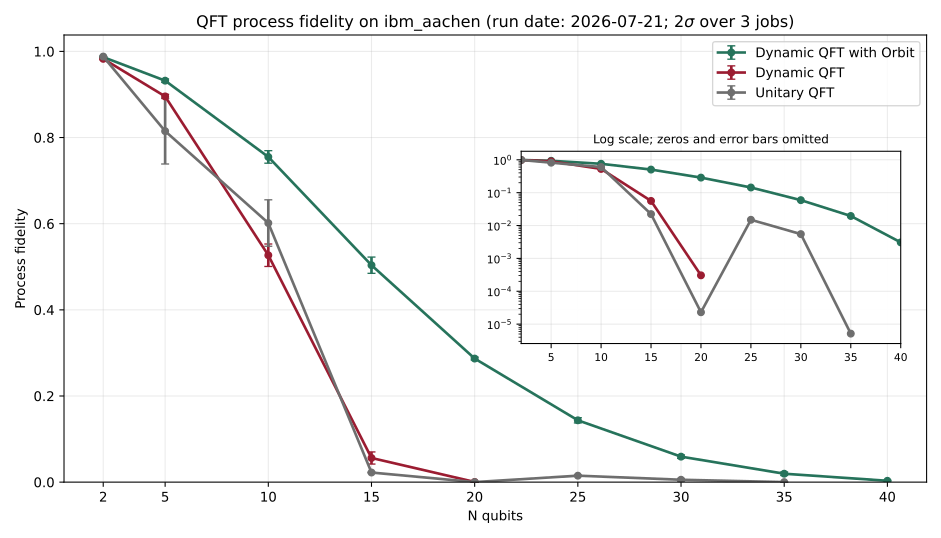
กราฟแบบ static ด้านล่างแสดงเส้นโค้ง process-fidelity เฉลี่ยจากสาม development job ที่รันติดต่อกันบน ibm_aachen ด้วยกระบวนการที่อธิบายไว้ด้านล่าง ดังที่แสดงในที่นี้ Orbit สามารถเพิ่มคุณภาพของ dynamic circuit ได้อย่างมาก; dynamic QFT มีคุณภาพเทียบเท่ากับ benchmark ที่เผยแพร่ และแสดงให้เห็นการปรับปรุงเมื่อเทียบกับ unitary QFT แบบมาตรฐาน ดังที่เราจะเห็น ผลลัพธ์เหล่านี้มาจากการเลือกคิวบิตที่ดีแบบอัตโนมัติ, การแทรก dynamic decoupling แบบอัตโนมัติ (ไม่ได้ปรับแต่งด้วยมือสำหรับปัญหานี้), และการลด measurement error อย่าลืมเปรียบเทียบผลลัพธ์เหล่านี้กับผลลัพธ์ของคุณในตอนท้ายเพื่อความสนุก โดยเฉพาะถ้าคุณเลือก backend อื่น
หมายเหตุ: ผลลัพธ์เหล่านี้เป็นภาพตัวอย่างของการรันที่สำเร็จก่อนหน้านี้ด้วย Orbit ไม่ใช่การรับประกันประสิทธิภาพ ผลลัพธ์ด้านล่างควรมีลักษณะคล้ายกันในเชิงคุณภาพ แต่รายละเอียดขึ้นอยู่กับอุปกรณ์ที่เลือกและคุณสมบัติของมัน โดยเฉพาะ error จากการวัดและการรอ (idling) ในขณะรัน
# Added by doQumentation — required packages for this notebook
!pip install -q matplotlib numpy qiskit qiskit-ibm-catalog qiskit-ibm-runtime
ข้อกำหนด
ติดตั้งแพ็กเกจต่อไปนี้เวอร์ชันล่าสุดก่อนรัน tutorial นี้:
-
numpy -
matplotlib -
qiskit -
qiskit-ibm-runtime -
qiskit-ibm-catalog
pip install qiskit qiskit-ibm-runtime qiskit-ibm-catalog numpy matplotlib
การตั้งค่า
ยืนยันตัวตนด้วย IBM Quantum® Platform โหลด ibm_aachen และโหลด Quantum Elements Orbit จาก Qiskit Functions Catalog การ sweep ค่าเริ่มต้นจะประเมิน 15 ขนาด Circuit, 20 bitstring ที่สุ่มมาต่อขนาด, และสามกลยุทธ์ NUM_BATCH_JOBS=3 แบ่งขนาดออกเป็นสาม job ใน batch เดียว ลด N_VALUES หรือ M หรือเพิ่ม NUM_BATCH_JOBS หาก dynamic-circuit job แต่ละงานยังคงถึงขีดจำกัดหน่วยความจำของฮาร์ดแวร์ควบคุมแบบคลาสสิกของ backend ลด SHOTS เมื่อเป้าหมายคือการลดการใช้งานการรันมากกว่าจำนวนหรือความซับซ้อนของ Circuit
import warnings
from collections import Counter, defaultdict

import matplotlib.pyplot as plt
import numpy as np
from qiskit import (
    ClassicalRegister,
    QuantumCircuit,
    QuantumRegister,
    transpile,
)
from qiskit.circuit import IfElseOp
from qiskit.synthesis.qft import synth_qft_full
from qiskit_ibm_catalog import QiskitFunctionsCatalog
from qiskit_ibm_runtime import Batch, QiskitRuntimeService

IBM_BACKEND_NAME = "ibm_aachen"

N_VALUES = [2, 3, 4, 5, 6, 7, 8, 9, 10, 15, 20, 25, 30, 35, 40]
M = 20
SHOTS = 1024
RNG_SEED = 12345
OPTIMIZATION_LEVEL = 0
NUM_BATCH_JOBS = 3
STRATEGY_LABELS = ("unitary/raw", "dynamic/raw", "dynamic/orbit")

def balanced_n_groups(
    n_values: list[int], num_jobs: int = 3
) -> list[list[int]]:
    values = sorted(n_values)
    if len(set(values)) != len(values):
        raise ValueError("N_VALUES must not contain duplicates")
    if not 1 <= num_jobs <= len(values):
        raise ValueError("NUM_BATCH_JOBS must be between 1 and len(N_VALUES)")

    max_group_size = (len(values) + num_jobs - 1) // num_jobs
    groups = [[] for _ in range(num_jobs)]
    loads = [0] * num_jobs
    pair_counts = [0] * num_jobs
    remaining = values.copy()

    while len(remaining) >= 2:
        candidates = [
            i
            for i, group in enumerate(groups)
            if len(group) + 2 <= max_group_size
        ]
        if not candidates:
            break
        smallest = remaining.pop(0)
        largest = remaining.pop()
        job_index = min(
            candidates, key=lambda i: (loads[i], len(groups[i]), i)
        )
        pair = (
            [largest, smallest]
            if pair_counts[job_index] % 2 == 0
            else [smallest, largest]
        )
        groups[job_index].extend(pair)
        loads[job_index] += smallest + largest
        pair_counts[job_index] += 1

    while remaining:
        value = remaining.pop()
        candidates = [
            i for i, group in enumerate(groups) if len(group) < max_group_size
        ]
        job_index = min(
            candidates, key=lambda i: (loads[i], len(groups[i]), i)
        )
        groups[job_index].append(value)
        loads[job_index] += value

    return groups

N_GROUPS = balanced_n_groups(N_VALUES, NUM_BATCH_JOBS)

service = QiskitRuntimeService(channel="ibm_quantum_platform")
backend = service.backend(IBM_BACKEND_NAME)
if "if_else" not in backend.target.operation_names:
    backend.target.add_instruction(IfElseOp, name="if_else")

catalog = QiskitFunctionsCatalog(channel="ibm_quantum_platform")
quantum_elements_orbit = catalog.load("quantum-elements/orbit")
if quantum_elements_orbit is None:
    raise RuntimeError(
        "Quantum Elements Orbit is not enabled for this IBM Quantum instance."
    )

required_qubits = max(N_VALUES)
if backend.num_qubits < required_qubits:
    raise ValueError(
        f"Backend {backend.name} has {backend.num_qubits} qubits, "
        f"but this benchmark needs at least {required_qubits}."
    )

{
    "backend": backend.name,
    "num_qubits": backend.num_qubits,
    "n_values": N_VALUES,
    "m": M,
    "shots": SHOTS,
    "num_function_jobs": NUM_BATCH_JOBS,
    "n_groups": N_GROUPS,
    "pubs_per_job": [
        len(group) * M * len(STRATEGY_LABELS) for group in N_GROUPS
    ],
    "total_pubs": len(N_VALUES) * M * len(STRATEGY_LABELS),
    "total_shots": len(N_VALUES) * M * len(STRATEGY_LABELS) * SHOTS,
}
qiskit_runtime_service._discover_account:WARNING:2026-07-21 15:57:39,310: Loading account with the given token. A saved account will not be used.
{'backend': 'ibm_aachen',
 'num_qubits': 156,
 'n_values': [2, 3, 4, 5, 6, 7, 8, 9, 10, 15, 20, 25, 30, 35, 40],
 'm': 20,
 'shots': 1024,
 'num_function_jobs': 3,
 'n_groups': [[40, 2, 7, 15, 10], [35, 3, 6, 20, 9], [30, 4, 5, 25, 8]],
 'pubs_per_job': [300, 300, 300],
 'total_pubs': 900,
 'total_shots': 921600}
สร้าง Circuit ของ QFT+M
สำหรับจำนวนเต็ม ที่สุ่มมาแต่ละตัว bit_inv_qft เตรียม product state ด้วย Hadamard ตามด้วยการหมุนเฟส จากนั้น notebook จะต่อท้ายด้วย unitary QFT มาตรฐาน หรือ semiclassical dynamic QFT+M ที่เทียบเท่ากัน
การทำงานทั้งสองแบบละเว้น final swap network ลำดับการแสดงผลของ classical bit ใน Qiskit จึงทำให้ bitstring ที่คาดว่าจะวัดได้เป็นลำดับย้อนกลับของการแทนค่าไบนารีที่เติมศูนย์ของ ซึ่งเข้ารหัสโดย format(x, f"0{n}b")[::-1]
def bit_inv_qft(circuit: QuantumCircuit, x: int, conv: str = "LSB") -> None:
    num_qubits = circuit.num_qubits
    circuit.h(range(num_qubits))
    for j in range(num_qubits):
        phase = (
            2 * np.pi * x / 2 ** (num_qubits - j)
            if conv == "LSB"
            else 2 * np.pi * x / 2 ** (j + 1)
        )
        circuit.p(-phase, j)

def build_unitary_qft_circuit(num_qubits: int, x: int) -> QuantumCircuit:
    if not 0 <= x < 2**num_qubits:
        raise ValueError(
            f"x={x} is outside the {num_qubits}-qubit basis range"
        )
    qreg = QuantumRegister(num_qubits, "q")
    creg = ClassicalRegister(num_qubits, "c")
    circuit = QuantumCircuit(qreg, creg, name=f"unitary_qft_{num_qubits}q")
    bit_inv_qft(circuit, x)
    circuit.append(
        synth_qft_full(num_qubits, do_swaps=False), range(num_qubits)
    )
    circuit.measure(range(num_qubits), range(num_qubits))
    return circuit

def _warn_if_precision_loss(max_num_entanglements: int) -> None:
    if max_num_entanglements > -np.finfo(float).minexp:
        warnings.warn(
            "precision loss in QFT."
            f" The rotation needed to represent {max_num_entanglements} entanglements"
            " is smaller than the smallest normal floating-point number.",
            category=RuntimeWarning,
            stacklevel=4,
        )

def synth_dynamic_qft(
    circuit: QuantumCircuit, *, do_swaps: bool = False
) -> QuantumCircuit:
    num_qubits = circuit.num_qubits
    creg = circuit.cregs[0]
    _warn_if_precision_loss(num_qubits - 1)

    for j in reversed(range(num_qubits)):
        circuit.h(j)
        circuit.measure([j], [j])

        if j > 0:
            with circuit.if_test((creg[j], 1)):
                for k in reversed(range(j)):
                    circuit.p(np.pi * (2.0 ** (k - j)), k)

    if do_swaps:
        for i in range(num_qubits // 2):
            circuit.swap(i, num_qubits - i - 1)
    return circuit

def build_dynamic_qft_circuit(num_qubits: int, x: int) -> QuantumCircuit:
    if not 0 <= x < 2**num_qubits:
        raise ValueError(
            f"x={x} is outside the {num_qubits}-qubit basis range"
        )
    qreg = QuantumRegister(num_qubits, "q")
    creg = ClassicalRegister(num_qubits, "c")
    circuit = QuantumCircuit(qreg, creg, name=f"dynamic_qft_{num_qubits}q")
    bit_inv_qft(circuit, x)
    synth_dynamic_qft(circuit, do_swaps=False)
    return circuit

def target_output_bitstring(x: int, n_qubits: int) -> str:
    return format(int(x), f"0{n_qubits}b")[::-1]

def process_fidelity_from_success_probabilities(
    success_probabilities: list[float],
) -> float:
    m = len(success_probabilities)
    if m <= 1:
        raise ValueError(
            "m must be larger than 1 for the process-fidelity estimator"
        )
    succ = np.asarray(success_probabilities, dtype=float)
    return float(
        (m / (m - 1)) * (np.mean(np.sqrt(succ)) ** 2)
        - np.sum(succ) / (m * (m - 1))
    )
เลือกคิวบิตทางกายภาพสำหรับ dynamic circuit
การทำงานแบบ dynamic ไม่ต้องการ gate สองคิวบิต ดังนั้นคิวบิตทางกายภาพของมันจึงไม่จำเป็นต้องรวมกันเป็น subgraph ที่เชื่อมต่อกัน สำหรับแต่ละขนาด Circuit ตัวคัดเลือกจะจัดอันดับคิวบิตของ backend ปัจจุบันโดยใช้คะแนนที่ถ่วงน้ำหนัก 80% ต่อ readout error ที่ต่ำกว่า และ 10% ต่อ และ ที่สูงกว่าอย่างละส่วน โดยจะเลือกคิวบิตที่มีคะแนนสูงและไม่มีการเชื่อมต่อโดยตรงระหว่างกันก่อนเมื่อเป็นไปได้ ซึ่งสามารถลดการสัมผัส crosstalk ระหว่างเพื่อนบ้านใกล้เคียง แล้วจึงเติมตำแหน่งที่เหลือตามคะแนน
รูปแบบ dynamic/raw และ dynamic/orbit ใช้ layout ที่เลือกเหมือนกันทุกประการสำหรับขนาดที่กำหนด ทำให้การเปรียบเทียบระหว่างกันควบคุมด้วย layout ในขณะที่ Circuit unitary/raw ถูก map และ route โดย transpiler แทน เนื่องจากต้องการการเชื่อมต่อแบบสองคิวบิต การเลือกที่ใช้การ calibration แบบ runtime นี้เจาะจงสำหรับ tutorial นี้เท่านั้น ไม่ใช่ layout ibm_kyiv แบบ 40 คิวบิตคงที่ที่ใช้ในการทดลอง Figure 2a ของบทความ
def value_from_property(raw):
    if raw is None:
        return None
    if isinstance(raw, tuple):
        return raw[0]
    return getattr(raw, "value", raw)

def qubit_property_value(properties, qubit: int, *names: str) -> float | None:
    for name in names:
        try:
            value = value_from_property(
                properties.qubit_property(qubit, name)
            )
        except Exception:
            value = None
        if value is not None:
            return float(value)
    return None

def measurement_error(properties, qubit: int) -> float | None:
    readout = qubit_property_value(properties, qubit, "readout_error")
    if readout is not None:
        return readout
    p01 = qubit_property_value(properties, qubit, "prob_meas0_prep1")
    p10 = qubit_property_value(properties, qubit, "prob_meas1_prep0")
    if p01 is not None and p10 is not None:
        return 0.5 * (p01 + p10)
    return None

def coupling_edges(backend) -> list[tuple[int, int]]:
    coupling_map = getattr(backend, "coupling_map", None)
    if coupling_map is not None:
        try:
            return [(int(a), int(b)) for a, b in coupling_map.get_edges()]
        except Exception:
            pass
    built = backend.target.build_coupling_map()
    return [(int(a), int(b)) for a, b in built.get_edges()]

def neighbor_map(backend) -> dict[int, set[int]]:
    neighbors = {qubit: set() for qubit in range(backend.num_qubits)}
    for a, b in coupling_edges(backend):
        neighbors[a].add(b)
        neighbors[b].add(a)
    return neighbors

def anchored_score(
    value: float | None, *, good: float, bad: float, higher_is_better: bool
) -> float:
    if value is None:
        return 0.0
    if higher_is_better:
        low, high = sorted((bad, good))
        score = (value - low) / (high - low)
    else:
        low, high = sorted((good, bad))
        score = (high - value) / (high - low)
    return float(min(1.0, max(0.0, score)))

def qubit_metrics(backend) -> list[dict]:
    properties = backend.properties()
    rows = []
    for qubit in range(backend.num_qubits):
        t1 = qubit_property_value(properties, qubit, "T1", "t1")
        t2 = qubit_property_value(properties, qubit, "T2", "t2")
        meas_error = measurement_error(properties, qubit)
        measurement_score = anchored_score(
            meas_error, good=0.005, bad=0.05, higher_is_better=False
        )
        t1_score = anchored_score(
            t1, good=0.00025, bad=0.00005, higher_is_better=True
        )
        t2_score = anchored_score(
            t2, good=0.00025, bad=0.00005, higher_is_better=True
        )
        rows.append(
            {
                "qubit": qubit,
                "t1": t1,
                "t2": t2,
                "measurement_error": meas_error,
                "score": 0.8 * measurement_score
                + 0.1 * t1_score
                + 0.1 * t2_score,
            }
        )
    return sorted(rows, key=lambda row: row["score"], reverse=True)

def select_dynamic_qubits(backend, n_qubits: int) -> list[int]:
    ranked = qubit_metrics(backend)
    neighbors = neighbor_map(backend)
    selected = []
    blocked = set()
    for row in ranked:
        qubit = row["qubit"]
        if qubit in blocked:
            continue
        selected.append(qubit)
        blocked.add(qubit)
        blocked.update(neighbors.get(qubit, set()))
        if len(selected) == n_qubits:
            return selected

    for row in ranked:
        qubit = row["qubit"]
        if qubit not in selected:
            selected.append(qubit)
        if len(selected) == n_qubits:
            return selected
    raise RuntimeError(f"Could not select {n_qubits} physical qubits")

print("The top 3 qubits (according to our scoring): ")
print(qubit_metrics(backend)[0:3])
print("Worst  3 qubits (according to our scoring): ")
print(qubit_metrics(backend)[-3:])
The top 3 qubits (according to our scoring):
[{'qubit': 0, 't1': 0.0002514242577986401, 't2': 0.00037559012475638467, 'measurement_error': 0.0028076171875, 'score': 1.0}, {'qubit': 20, 't1': 0.0002526252407383437, 't2': 0.00038493543771861573, 'measurement_error': 0.00390625, 'score': 1.0}, {'qubit': 25, 't1': 0.0002712841332005567, 't2': 0.00025793268824583597, 'measurement_error': 0.0040283203125, 'score': 1.0}]
Worst  3 qubits (according to our scoring):
[{'qubit': 146, 't1': 7.619772882181663e-05, 't2': 0.00014166983578724752, 'measurement_error': 0.0802001953125, 'score': 0.05893378230453208}, {'qubit': 51, 't1': 0.00014200221819602618, 't2': 1.930870507157441e-06, 'measurement_error': 0.054443359375, 'score': 0.04600110909801309}, {'qubit': 35, 't1': 7.116087485472031e-05, 't2': 9.463696242928626e-05, 'measurement_error': 0.14501953125, 'score': 0.03289891864200328}]
เตรียม PUB สำหรับ benchmark
สำหรับคู่ (N, x) ทุกคู่ notebook จะ transpile Circuit แบบตรรกะก่อน และสร้าง Sampler PUB หนึ่งรายการสำหรับแต่ละกลยุทธ์:
-
unitary/raw: unitary QFT+M บน layout ที่ transpiler เลือก พร้อม routing ตามความจำเป็น และไม่มี DD หรือ MEM จาก Orbit -
dynamic/raw: dynamic QFT+M บนคิวบิตทางกายภาพที่เลือกจากการ calibration โดยไม่มี DD หรือ MEM จาก Orbit -
dynamic/orbit: dynamic circuit ที่ transpile เหมือนกันบนคิวบิตทางกายภาพเดียวกัน โดยเปิดใช้งาน DD และ MEM ของ Orbit
PUB ที่ปรับปรุงด้วย Orbit ใช้ transpilation_mode="validate" เนื่องจากมี mapping ถูกเลือกไว้แล้ว Orbit ตรวจสอบความถูกต้องของ Circuit ทางกายภาพที่ให้มาแทนที่จะ remap มัน แล้วจึงใช้ pipeline DD และ MEM ของมัน เนื่องจากมีเพียงเส้นโค้ง dynamic ที่ปรับปรุงแล้วเท่านั้นที่ขอ MEM จึงไม่ควรตีความว่าเป็นการเปรียบเทียบ DD-กับ-ไม่มี-DD แบบแยกเดี่ยว
PUB, ตัวเลือกต่อ PUB, และบันทึกผลลัพธ์จะถูกเก็บตามดัชนี batch-job สำหรับ คงที่แต่ละค่า PUB ของ unitary/raw, dynamic/raw, และ dynamic/orbit จะถูกเก็บไว้ด้วยกันใน job เดียวกัน ตัวช่วยจัดกลุ่มจะจับคู่ขนาด Circuit ใหญ่และเล็ก สลับลำดับของมัน และปรับสมดุลผลรวมของ ระหว่างสาม job เพื่อเป็นตัวแทนอย่างง่ายของ workload ของฮาร์ดแวร์ควบคุมแบบคลาสสิก
strategy_options = {
    "unitary/raw": {"mode": "raw"},
    "dynamic/raw": {"mode": "raw"},
    "dynamic/orbit": {"mode": "orbit", "transpilation_mode": "validate"},
}
rng = np.random.default_rng(RNG_SEED)
pubs_by_job = [[] for _ in N_GROUPS]
pub_options_by_job = [[] for _ in N_GROUPS]
pub_records_by_job = [[] for _ in N_GROUPS]
layout_summary = {}

target_decimals_by_n = {
    n_qubits: [int(x) for x in rng.integers(0, 2**n_qubits, size=M)]
    for n_qubits in N_VALUES
}

for job_index, n_group in enumerate(N_GROUPS):
    for n_qubits in n_group:
        dynamic_qubits = select_dynamic_qubits(backend, n_qubits)
        layout_summary[str(n_qubits)] = {"dynamic_qubits": dynamic_qubits}

        for x in target_decimals_by_n[n_qubits]:
            target_bitstring = target_output_bitstring(x, n_qubits)
            unitary_logical = build_unitary_qft_circuit(n_qubits, x)
            dynamic_logical = build_dynamic_qft_circuit(n_qubits, x)

            unitary_transpiled = transpile(
                unitary_logical,
                backend=backend,
                optimization_level=OPTIMIZATION_LEVEL,
                seed_transpiler=RNG_SEED,
            )
            dynamic_transpiled = transpile(
                dynamic_logical,
                backend=backend,
                optimization_level=OPTIMIZATION_LEVEL,
                seed_transpiler=RNG_SEED,
                initial_layout=dynamic_qubits,
            )

            circuits_by_label = {
                "unitary/raw": unitary_transpiled,
                "dynamic/raw": dynamic_transpiled,
                "dynamic/orbit": dynamic_transpiled,
            }
            for label in STRATEGY_LABELS:
                circuit = circuits_by_label[label]
                options = dict(strategy_options[label])
                pubs_by_job[job_index].append((circuit, None, SHOTS))
                pub_options_by_job[job_index].append(options)
                pub_records_by_job[job_index].append(
                    {
                        "job_index": job_index,
                        "n_qubits": n_qubits,
                        "target_decimal": x,
                        "target_bitstring": target_bitstring,
                        "label": label,
                        "pub_options": options,
                        "dynamic_qubits": (
                            dynamic_qubits
                            if label.startswith("dynamic/")
                            else None
                        ),
                        "transpiled_depth": circuit.depth(),
                        "transpiled_size": circuit.size(),
                    }
                )

{
    "num_function_jobs": len(N_GROUPS),
    "n_groups": {
        job_index: group for job_index, group in enumerate(N_GROUPS)
    },
    "n_load_per_job": {
        job_index: sum(group) for job_index, group in enumerate(N_GROUPS)
    },
    "pubs_per_job": {
        job_index: len(pubs) for job_index, pubs in enumerate(pubs_by_job)
    },
    "expected_executions_per_job": {
        job_index: len(pubs) * SHOTS
        for job_index, pubs in enumerate(pubs_by_job)
    },
    "first_pub_record_by_job": {
        job_index: records[0]
        for job_index, records in enumerate(pub_records_by_job)
    },
    "largest_dynamic_qubit_set": layout_summary[str(max(N_VALUES))][
        "dynamic_qubits"
    ],
}
{'num_function_jobs': 3,
 'n_groups': {0: [40, 2, 7, 15, 10],
  1: [35, 3, 6, 20, 9],
  2: [30, 4, 5, 25, 8]},
 'n_load_per_job': {0: 74, 1: 73, 2: 72},
 'pubs_per_job': {0: 300, 1: 300, 2: 300},
 'expected_executions_per_job': {0: 307200, 1: 307200, 2: 307200},
 'first_pub_record_by_job': {0: {'job_index': 0,
   'n_qubits': 40,
   'target_decimal': 853235401719,
   'target_bitstring': '1110111111000000110100110001010101100011',
   'label': 'unitary/raw',
   'pub_options': {'mode': 'raw'},
   'dynamic_qubits': None,
   'transpiled_depth': 4778,
   'transpiled_size': 28259},
  1: {'job_index': 1,
   'n_qubits': 35,
   'target_decimal': 26888951661,
   'target_bitstring': '10110110111010110010110101000010011',
   'label': 'unitary/raw',
   'pub_options': {'mode': 'raw'},
   'dynamic_qubits': None,
   'transpiled_depth': 3614,
   'transpiled_size': 21204},
  2: {'job_index': 2,
   'n_qubits': 30,
   'target_decimal': 620442965,
   'target_bitstring': '101010101010110011011111001001',
   'label': 'unitary/raw',
   'pub_options': {'mode': 'raw'},
   'dynamic_qubits': None,
   'transpiled_depth': 2835,
   'transpiled_size': 15078}},
 'largest_dynamic_qubit_set': [0,
  20,
  25,
  27,
  33,
  59,
  74,
  80,
  95,
  144,
  151,
  155,
  79,
  90,
  60,
  68,
  114,
  107,
  13,
  126,
  133,
  103,
  3,
  87,
  53,
  41,
  130,
  5,
  98,
  135,
  153,
  15,
  116,
  45,
  7,
  48,
  136,
  11,
  147,
  77]}
รัน benchmark
สร้าง batch หนึ่งชุด จากนั้นส่ง Orbit function job สามงานเข้าไปในนั้น
job ถูกแบ่งตามกลุ่มจำนวนคิวบิต เพื่อให้สามารถเปรียบเทียบทั้งสามกลยุทธ์สำหรับ คงที่ได้ กล่าวคือ PUB ทั้ง 60 รายการสำหรับ คงที่ — อินพุตที่สุ่มมา 20 รายการคูณด้วยสามกลยุทธ์ — จึงรันใน job เดียวกัน และสามารถเปรียบเทียบกันได้อย่างเป็นธรรมที่สุดเท่าที่จะทำได้ (มิฉะนั้น หากรันใน job ต่างกัน อุปกรณ์อาจ drift ไปในขณะที่อยู่ในคิว) กลุ่มเริ่มต้นรวม Circuit ขนาดใหญ่และเล็กเข้าด้วยกัน และมี 300 PUB ต่อกลุ่ม ซึ่งลดโอกาสที่ job หนึ่งจะสะสม dynamic program ที่ใหญ่ที่สุดทั้งหมด ในขณะที่ยังคงรักษาการเปรียบเทียบภายใน job ไว้
runtime_batch = Batch(backend=backend)
jobs = []
try:
    for job_index, pubs in enumerate(pubs_by_job):
        jobs.append(
            quantum_elements_orbit.run(
                primitive="sampler",
                pubs=pubs,
                backend_name=backend.name,
                options={
                    "pub_options": pub_options_by_job[job_index],
                    "save_backend_info": True,
                },
            )
        )
except Exception:
    runtime_batch.close()
    raise

{
    "runtime_batch_id": runtime_batch.session_id,
    "jobs": {
        job_index: {
            "backend": backend.name,
            "function_job_id": job.job_id,
            "status": job.status(),
            "n_values": N_GROUPS[job_index],
            "num_pubs": len(pubs_by_job[job_index]),
        }
        for job_index, job in enumerate(jobs)
    },
}
{'runtime_batch_id': '80120e36-436d-46c7-96c9-597ec86060c1',
 'jobs': {0: {'backend': 'ibm_aachen',
   'function_job_id': '2b6b05ac-0136-40f0-94bf-ade5658f5f4f',
   'status': 'QUEUED',
   'n_values': [40, 2, 7, 15, 10],
   'num_pubs': 300},
  1: {'backend': 'ibm_aachen',
   'function_job_id': '4f046fd4-80e4-460b-87c7-e7252691f764',
   'status': 'QUEUED',
   'n_values': [35, 3, 6, 20, 9],
   'num_pubs': 300},
  2: {'backend': 'ibm_aachen',
   'function_job_id': '6d70d64d-fa38-4ca2-9cbd-ffda5d8c99be',
   'status': 'QUEUED',
   'n_values': [30, 4, 5, 25, 8],
   'num_pubs': 300}}}
ดึงผลลัพธ์และคำนวณ process fidelity
ดึงและตรวจสอบผลลัพธ์ของแต่ละกลุ่มคิวบิตอย่างเป็นอิสระ จากนั้นรวมสตรีมของ job ทั้งสามผ่านบันทึกที่จัดดัชนีตาม job batch จะถูกเก็บไว้แบบเปิดในขณะที่ผลลัพธ์ function ทั้งหมดถูกร้องขอ และปิดใน block finally หลังจากที่พยายามรัน job ทุกงานแล้ว สำหรับแต่ละ PUB คือความน่าจะเป็นที่กำหนดให้กับ bitstring ที่คาดว่าจะได้ extract_counts อ่าน count ที่ส่งกลับมาให้ผู้เรียก; สำหรับ dynamic/orbit นี่คือ count ที่ปรับด้วย MEM แล้วเมื่อการลด error สำเร็จ extract_raw_counts ยังกู้คืน count ที่ไม่ได้ลด error ที่บันทึกไว้ใน metadata ของ Orbit ด้วย โค้ดจัดกลุ่มค่า 20 ค่าสำหรับแต่ละคู่ (N, label) และใช้ตัวประมาณค่าที่นำเสนอไว้ข้างต้น
ดังนั้น dictionary process_fidelity ที่พล็อตจึงใช้ count ดิบสำหรับ unitary/raw และ dynamic/raw แต่ใช้ count ที่ปรับด้วย MEM สำหรับ dynamic/orbit dictionary raw_process_fidelity แบบขนานจะเก็บการคำนวณที่ไม่ได้ลด error ไว้สำหรับทุกกลยุทธ์ และมีประโยชน์เมื่อต้องการแยกผลของ MEM ออกจากส่วนที่เหลือของ pipeline Orbit MEM แก้ไข output histogram ที่ส่งกลับมา; มันไม่สามารถเปลี่ยนผลการวัดกลาง Circuit ย้อนหลังที่ถูกใช้ไปแล้วโดย real-time feedforward ได้
def extract_counts(pub_result) -> dict[str, int]:
    data = getattr(pub_result, "data", None)
    if data is None:
        raise TypeError("pub_result.data is missing")

    for name in dir(data):
        if name.startswith("_"):
            continue
        register = getattr(data, name)
        get_counts = getattr(register, "get_counts", None)
        if callable(get_counts):
            counts = get_counts()
            if counts:
                return counts

    raise TypeError(
        "No classical register with get_counts() found in pub_result.data"
    )

def extract_raw_counts(pub_result) -> dict[str, int]:
    orbit_metadata = pub_result.metadata.get("quantum_elements_orbit", {})
    mem_report = orbit_metadata.get("measurementErrorMitigation", {})
    return mem_report.get("rawCounts") or extract_counts(pub_result)

def probability_for_bitstring(
    counts: dict[str, int], bitstring: str, n_qubits: int
) -> float:
    total = sum(counts.values())
    if total <= 0:
        return 0.0
    normalized = Counter()
    for measured, count in counts.items():
        key = measured.replace(" ", "")[-n_qubits:].zfill(n_qubits)
        normalized[key] += count
    return float(normalized.get(bitstring, 0) / total)

results_by_job = {}
job_failures = []
try:
    for job_index, job in enumerate(jobs):
        try:
            job_result = job.result()
        except Exception as exc:
            job_logs = getattr(job, "logs", lambda: "")()
            if job_logs:
                print(f"Logs for job {job_index} ({job.job_id}):\n{job_logs}")
            job_failures.append(
                f"job {job_index} ({job.job_id}) failed: {type(exc).__name__}: {exc}"
            )
            continue

        expected_results = len(pub_records_by_job[job_index])
        if len(job_result) != expected_results:
            job_failures.append(
                f"job {job_index} ({job.job_id}) returned {len(job_result)} PUB results; "
                f"expected {expected_results}"
            )
            continue
        results_by_job[job_index] = job_result
finally:
    runtime_batch.close()

if job_failures:
    raise RuntimeError(
        "One or more batched Orbit jobs failed:\n" + "\n".join(job_failures)
    )

grouped_success = defaultdict(list)
grouped_raw_success = defaultdict(list)
pub_summaries = []

for job_index, job_result in sorted(results_by_job.items()):
    records = pub_records_by_job[job_index]
    for record, pub_result in zip(records, job_result, strict=True):
        label = record["label"]
        n_qubits = record["n_qubits"]
        counts = extract_counts(pub_result)
        raw_counts = extract_raw_counts(pub_result)
        success = probability_for_bitstring(
            counts, record["target_bitstring"], n_qubits
        )
        raw_success = probability_for_bitstring(
            raw_counts, record["target_bitstring"], n_qubits
        )
        key = (n_qubits, label)
        grouped_success[key].append(success)
        grouped_raw_success[key].append(raw_success)

        orbit_report = pub_result.metadata.get("quantum_elements_orbit", {})
        mem_report = orbit_report.get("measurementErrorMitigation", {})
        pub_summaries.append(
            {
                **record,
                "function_job_id": jobs[job_index].job_id,
                "runtime_batch_id": runtime_batch.session_id,
                "success_probability": success,
                "raw_success_probability": raw_success,
                "orbit_mode": orbit_report.get("mode"),
                "transpilation_mode": orbit_report.get("transpilationMode"),
                "physical_layout": orbit_report.get("physicalLayout"),
                "dd_status": orbit_report.get("status", "not_applied"),
                "num_sequences_added": orbit_report.get(
                    "numSequencesAdded", 0
                ),
                "num_gaps_filled": orbit_report.get("numGapsFilled", 0),
                "dynamic_dd_seq": orbit_report.get("dynamicDdSeq"),
                "mem_status": mem_report.get("status", "not_requested"),
                "warnings": orbit_report.get("warnings", [])
                + mem_report.get("warnings", []),
            }
        )

process_fidelity = defaultdict(dict)
raw_process_fidelity = defaultdict(dict)
mean_success_probability = defaultdict(dict)
raw_mean_success_probability = defaultdict(dict)

for (n_qubits, label), probabilities in sorted(grouped_success.items()):
    n_key = str(n_qubits)
    process_fidelity[n_key][label] = (
        process_fidelity_from_success_probabilities(probabilities)
    )
    mean_success_probability[n_key][label] = float(np.mean(probabilities))

for (n_qubits, label), probabilities in sorted(grouped_raw_success.items()):
    n_key = str(n_qubits)
    raw_process_fidelity[n_key][label] = (
        process_fidelity_from_success_probabilities(probabilities)
    )
    raw_mean_success_probability[n_key][label] = float(np.mean(probabilities))

process_fidelity = dict(process_fidelity)
raw_process_fidelity = dict(raw_process_fidelity)
mean_success_probability = dict(mean_success_probability)
raw_mean_success_probability = dict(raw_mean_success_probability)

{
    "runtime_batch_id": runtime_batch.session_id,
    "function_job_ids": {
        job_index: job.job_id for job_index, job in enumerate(jobs)
    },
    "n_groups": {
        job_index: group for job_index, group in enumerate(N_GROUPS)
    },
    "process_fidelity": process_fidelity,
    "mean_success_probability": mean_success_probability,
}
{'runtime_batch_id': '80120e36-436d-46c7-96c9-597ec86060c1',
 'function_job_ids': {0: '2b6b05ac-0136-40f0-94bf-ade5658f5f4f',
  1: '4f046fd4-80e4-460b-87c7-e7252691f764',
  2: '6d70d64d-fa38-4ca2-9cbd-ffda5d8c99be'},
 'n_groups': {0: [40, 2, 7, 15, 10],
  1: [35, 3, 6, 20, 9],
  2: [30, 4, 5, 25, 8]},
 'process_fidelity': {'2': {'dynamic/orbit': 0.9870551835473073,
   'dynamic/raw': 0.9912537998030566,
   'unitary/raw': 0.9884650767434809},
  '3': {'dynamic/orbit': 0.9662998634131841,
   'dynamic/raw': 0.9699631603283018,
   'unitary/raw': 0.9388637172865901},
  '4': {'dynamic/orbit': 0.9271266520750502,
   'dynamic/raw': 0.7334377020091254,
   'unitary/raw': 0.9010122207121433},
  '5': {'dynamic/orbit': 0.8883501513887149,
   'dynamic/raw': 0.6577660260669806,
   'unitary/raw': 0.7806443417987445},
  '6': {'dynamic/orbit': 0.8524225652033044,
   'dynamic/raw': 0.4444025126308521,
   'unitary/raw': 0.7167426842521228},
  '7': {'dynamic/orbit': 0.832962085697061,
   'dynamic/raw': 0.2253787798698553,
   'unitary/raw': 0.5746335601063436},
  '8': {'dynamic/orbit': 0.7881895956180588,
   'dynamic/raw': 0.16909516699831612,
   'unitary/raw': 0.5408263851227074},
  '9': {'dynamic/orbit': 0.7422635627368794,
   'dynamic/raw': 0.0242474245097341,
   'unitary/raw': 0.4855953298367578},
  '10': {'dynamic/orbit': 0.7002274273149545,
   'dynamic/raw': 0.033718865729016285,
   'unitary/raw': 0.3607634828181049},
  '15': {'dynamic/orbit': 0.4694995355699914,
   'dynamic/raw': 7.70970394736842e-05,
   'unitary/raw': 0.054582117352985286},
  '20': {'dynamic/orbit': 0.24118032284867608,
   'dynamic/raw': 4.235164736271502e-22,
   'unitary/raw': 0.0},
  '25': {'dynamic/orbit': 0.027122712989729438,
   'dynamic/raw': 0.0,
   'unitary/raw': 0.0},
  '30': {'dynamic/orbit': 0.0003581886014704875,
   'dynamic/raw': 0.0,
   'unitary/raw': 0.0},
  '35': {'dynamic/orbit': 0.0, 'dynamic/raw': 0.0, 'unitary/raw': 0.0},
  '40': {'dynamic/orbit': 0.0, 'dynamic/raw': 0.0, 'unitary/raw': 0.0}},
 'mean_success_probability': {'2': {'dynamic/orbit': 0.987060546875,
   'dynamic/raw': 0.991259765625,
   'unitary/raw': 0.9884765625},
  '3': {'dynamic/orbit': 0.96630859375,
   'dynamic/raw': 0.969970703125,
   'unitary/raw': 0.939013671875},
  '4': {'dynamic/orbit': 0.9271484375,
   'dynamic/raw': 0.7337890625,
   'unitary/raw': 0.901318359375},
  '5': {'dynamic/orbit': 0.88837890625,
   'dynamic/raw': 0.657861328125,
   'unitary/raw': 0.78115234375},
  '6': {'dynamic/orbit': 0.85244140625,
   'dynamic/raw': 0.44453125,
   'unitary/raw': 0.71728515625},
  '7': {'dynamic/orbit': 0.8330078125,
   'dynamic/raw': 0.22568359375,
   'unitary/raw': 0.575390625},
  '8': {'dynamic/orbit': 0.788232421875,
   'dynamic/raw': 0.169189453125,
   'unitary/raw': 0.541796875},
  '9': {'dynamic/orbit': 0.742333984375,
   'dynamic/raw': 0.0244140625,
   'unitary/raw': 0.487353515625},
  '10': {'dynamic/orbit': 0.70029296875,
   'dynamic/raw': 0.033935546875,
   'unitary/raw': 0.363037109375},
  '15': {'dynamic/orbit': 0.4697265625,
   'dynamic/raw': 0.00029296875,
   'unitary/raw': 0.055615234375},
  '20': {'dynamic/orbit': 0.241357421875,
   'dynamic/raw': 4.8828125e-05,
   'unitary/raw': 0.0},
  '25': {'dynamic/orbit': 0.041015625, 'dynamic/raw': 0.0, 'unitary/raw': 0.0},
  '30': {'dynamic/orbit': 0.0013671875,
   'dynamic/raw': 0.0,
   'unitary/raw': 0.0},
  '35': {'dynamic/orbit': 0.0, 'dynamic/raw': 0.0, 'unitary/raw': 0.0},
  '40': {'dynamic/orbit': 0.0, 'dynamic/raw': 0.0, 'unitary/raw': 0.0}}}
ตรวจสอบ metadata DD ของ Orbit
สรุปด้านล่างตรวจสอบ metadata ของ PUB dynamic/orbit แทนที่จะสันนิษฐานว่ามีการแทรก DD ที่ร้องขอแล้ว ตรวจสอบสถานะ, ลำดับ DD แบบ dynamic ที่รายงาน, คำเตือน, และจำนวนช่องว่างที่ถูกเติมและลำดับที่ถูกเพิ่ม การแทรกที่สำเร็จควรให้ค่าที่ไม่เป็นศูนย์สำหรับ PUB อย่างน้อยบางส่วน แต่ค่าที่แน่นอนขึ้นอยู่กับ Circuit ที่ถูกจัดตารางเวลาแล้ว ข้อจำกัดด้านเวลาของ backend และขนาด Circuit metadata นี้อธิบายลำดับที่ Orbit นำไปใช้; ไม่ควรระบุว่าเป็นโพรโทคอล FC-DD ของบทความ เว้นแต่รายงานจะระบุความเท่าเทียมกันนั้นอย่างชัดเจน
dd_summary = defaultdict(lambda: Counter())
sequence_totals = defaultdict(int)
warning_examples = []

for summary in pub_summaries:
    if summary["label"] != "dynamic/orbit":
        continue
    n_key = str(summary["n_qubits"])
    dd_summary[n_key][summary["dd_status"]] += 1
    sequence_totals[n_key] += int(summary.get("num_sequences_added") or 0)
    if summary.get("warnings") and len(warning_examples) < 5:
        warning_examples.append(
            {
                "n_qubits": summary["n_qubits"],
                "target_decimal": summary["target_decimal"],
                "warnings": summary["warnings"],
            }
        )

{
    "dynamic_orbit_dd_status_counts": {
        key: dict(value) for key, value in dd_summary.items()
    },
    "dynamic_orbit_sequences_added": dict(sequence_totals),
    "warning_examples": warning_examples,
}
{'dynamic_orbit_dd_status_counts': {'40': {'dd_inserted': 20},
  '2': {'dd_inserted': 20},
  '7': {'dd_inserted': 20},
  '15': {'dd_inserted': 20},
  '10': {'dd_inserted': 20},
  '35': {'dd_inserted': 20},
  '3': {'dd_inserted': 20},
  '6': {'dd_inserted': 20},
  '20': {'dd_inserted': 20},
  '9': {'dd_inserted': 20},
  '30': {'dd_inserted': 20},
  '4': {'dd_inserted': 20},
  '5': {'dd_inserted': 20},
  '25': {'dd_inserted': 20},
  '8': {'dd_inserted': 20}},
 'dynamic_orbit_sequences_added': {'40': 31200,
  '2': 40,
  '7': 840,
  '15': 4200,
  '10': 1800,
  '35': 23800,
  '3': 120,
  '6': 600,
  '20': 7600,
  '9': 1440,
  '30': 17400,
  '4': 240,
  '5': 400,
  '25': 12000,
  '8': 1120},
 'warning_examples': [{'n_qubits': 40,
   'target_decimal': 853235401719,
   'warnings': ['Post-DD x/y pulses are rewritten into the target basis (e.g. sx) for ISA compliance; this shifts exact pulse timing within each gap, so DD spacing is approximate. A future release will emit native pulses directly.',
    'MEM was applied unconditionally to the returned output bitstring without inferring whether each bit came from a terminal measurement or a mid-circuit measurement. This is meaningful for bits intended as circuit outputs, but Orbit does not retroactively or in real time change conditional branches that used unmitigated measurement results.']},
  {'n_qubits': 40,
   'target_decimal': 954673909846,
   'warnings': ['Post-DD x/y pulses are rewritten into the target basis (e.g. sx) for ISA compliance; this shifts exact pulse timing within each gap, so DD spacing is approximate. A future release will emit native pulses directly.',
    'MEM was applied unconditionally to the returned output bitstring without inferring whether each bit came from a terminal measurement or a mid-circuit measurement. This is meaningful for bits intended as circuit outputs, but Orbit does not retroactively or in real time change conditional branches that used unmitigated measurement results.']},
  {'n_qubits': 40,
   'target_decimal': 524641045908,
   'warnings': ['Post-DD x/y pulses are rewritten into the target basis (e.g. sx) for ISA compliance; this shifts exact pulse timing within each gap, so DD spacing is approximate. A future release will emit native pulses directly.',
    'MEM was applied unconditionally to the returned output bitstring without inferring whether each bit came from a terminal measurement or a mid-circuit measurement. This is meaningful for bits intended as circuit outputs, but Orbit does not retroactively or in real time change conditional branches that used unmitigated measurement results.']},
  {'n_qubits': 40,
   'target_decimal': 185651043478,
   'warnings': ['Post-DD x/y pulses are rewritten into the target basis (e.g. sx) for ISA compliance; this shifts exact pulse timing within each gap, so DD spacing is approximate. A future release will emit native pulses directly.',
    'MEM was applied unconditionally to the returned output bitstring without inferring whether each bit came from a terminal measurement or a mid-circuit measurement. This is meaningful for bits intended as circuit outputs, but Orbit does not retroactively or in real time change conditional branches that used unmitigated measurement results.']},
  {'n_qubits': 40,
   'target_decimal': 587114273567,
   'warnings': ['Post-DD x/y pulses are rewritten into the target basis (e.g. sx) for ISA compliance; this shifts exact pulse timing within each gap, so DD spacing is approximate. A future release will emit native pulses directly.',
    'MEM was applied unconditionally to the returned output bitstring without inferring whether each bit came from a terminal measurement or a mid-circuit measurement. This is meaningful for bits intended as circuit outputs, but Orbit does not retroactively or in real time change conditional branches that used unmitigated measurement results.']}]}
พล็อตเส้นโค้ง process-fidelity
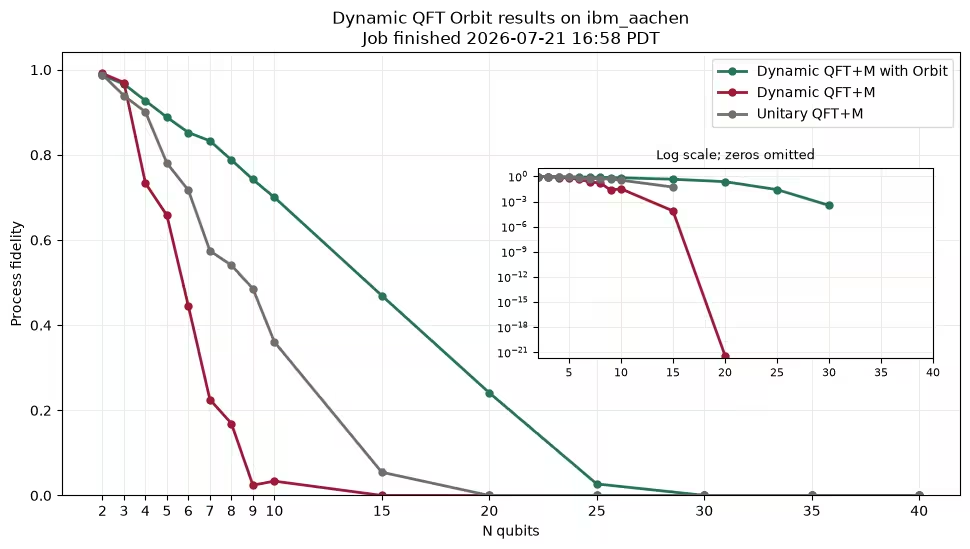
กราฟแสดงค่าประมาณจุดของ process-fidelity ของ QFT+M ที่ sample แล้ว เทียบกับจำนวนคิวบิตสำหรับสามกลยุทธ์ dynamic/raw และ dynamic/orbit ใช้ layout ทางกายภาพร่วมกันในแต่ละขนาด; unitary/raw ใช้ layout และ routing ของ transpiler
ต่างจาก Figure 2a กราฟนี้ไม่แสดงเส้นโค้ง unitary-with-DD หรือแถบความไม่แน่นอน และเส้นโค้งดิบของมันไม่ได้ถูกลด readout error ควรอ่านกราฟนี้ในฐานะการเปรียบเทียบการสเกลแบบ Figure 2a ของเวิร์กโฟลว์ Orbit นี้มากกว่า ไม่ใช่การทำซ้ำโดยตรงของเส้นโค้งที่เผยแพร่
from datetime import datetime
from zoneinfo import ZoneInfo

closed_at = runtime_batch.details()["closed_at"]  # "2026-07-22T00:08:54.89Z"
closed_dt = datetime.fromisoformat(closed_at.replace("Z", "+00:00"))
closed_local = closed_dt.astimezone(ZoneInfo("America/Los_Angeles"))
labels = ["dynamic/orbit", "dynamic/raw", "unitary/raw"]
colors = {
    "dynamic/orbit": "#26735b",
    "dynamic/raw": "#9b1c31",
    "unitary/raw": "#6e6e6e",
}
pretty_labels = {
    "dynamic/orbit": "Dynamic QFT+M with Orbit",
    "dynamic/raw": "Dynamic QFT+M",
    "unitary/raw": "Unitary QFT+M",
}

series = []
for label in labels:
    values = [process_fidelity[str(n)][label] for n in N_VALUES]
    log_values = [value if value > 0.0 else float("nan") for value in values]
    series.append((label, values, log_values))

nonzero_values = [
    value
    for _, _, log_values in series
    for value in log_values
    if value > 0.0
]
if not nonzero_values:
    raise RuntimeError(
        "No nonzero process-fidelity values found for log inset"
    )
log_floor = min(nonzero_values) / 2

fig, ax = plt.subplots(figsize=(9.8, 5.6))
for label, values, _ in series:
    ax.plot(
        N_VALUES,
        values,
        marker="o",
        linewidth=2.0,
        markersize=5,
        color=colors[label],
        label=pretty_labels[label],
    )

ax.set_xlabel("N qubits")
ax.set_ylabel("Process fidelity")
finished_time_for_title = globals().get("finished_local", closed_local)
ax.set_title(
    f"Dynamic QFT Orbit results on {IBM_BACKEND_NAME}\n"
    f"Job finished {finished_time_for_title:%Y-%m-%d %H:%M %Z}"
)
ax.set_xticks(N_VALUES)
ax.set_ylim(bottom=0)
ax.grid(axis="both", alpha=0.25)
ax.legend(loc="upper right")

inset = ax.inset_axes([0.53, 0.31, 0.44, 0.43])
for label, _, log_values in series:
    inset.plot(
        N_VALUES,
        log_values,
        marker="o",
        linewidth=2.0,
        markersize=5,
        color=colors[label],
    )
inset.set_yscale("log")
inset.set_ylim(bottom=log_floor)
inset.set_xlim(min(N_VALUES), max(N_VALUES))
inset.set_title("Log scale; zeros omitted", fontsize=9)
inset.grid(axis="both", alpha=0.25)
inset.tick_params(axis="both", labelsize=8)
inset.patch.set_alpha(0.96)

fig.tight_layout()
plt.show()
เอกสารอ้างอิง
ขั้นตอนถัดไป
-
ดูเอกสาร คู่มือ Orbit และ เอกสารอ้างอิง API
-
ลอง backend อื่น, layout ทางเลือก, หรือทดลองลำดับ dynamical decoupling แบบ orbit-enabled ทางเลือกโดยการปรับตัวเลือก
dd_strategyโปรดจำไว้ว่าเนื่องจากลักษณะทดลองของ dynamic circuit คุณต้องระมัดระวังโหมดความล้มเหลวของ job ที่อาจเกิดขึ้น (ดู [3] และ [4]) หากคุณพบค่า stretch ที่เป็นลบ [3] ให้ลองใช้ลำดับ DD ที่เล็กกว่า (พัลส์น้อยกว่า) หากคุณพบ [4] ให้เพิ่มNUM_BATCH_JOBS, ลดM, หรือลดค่าที่ใหญ่ที่สุดในN_VALUES